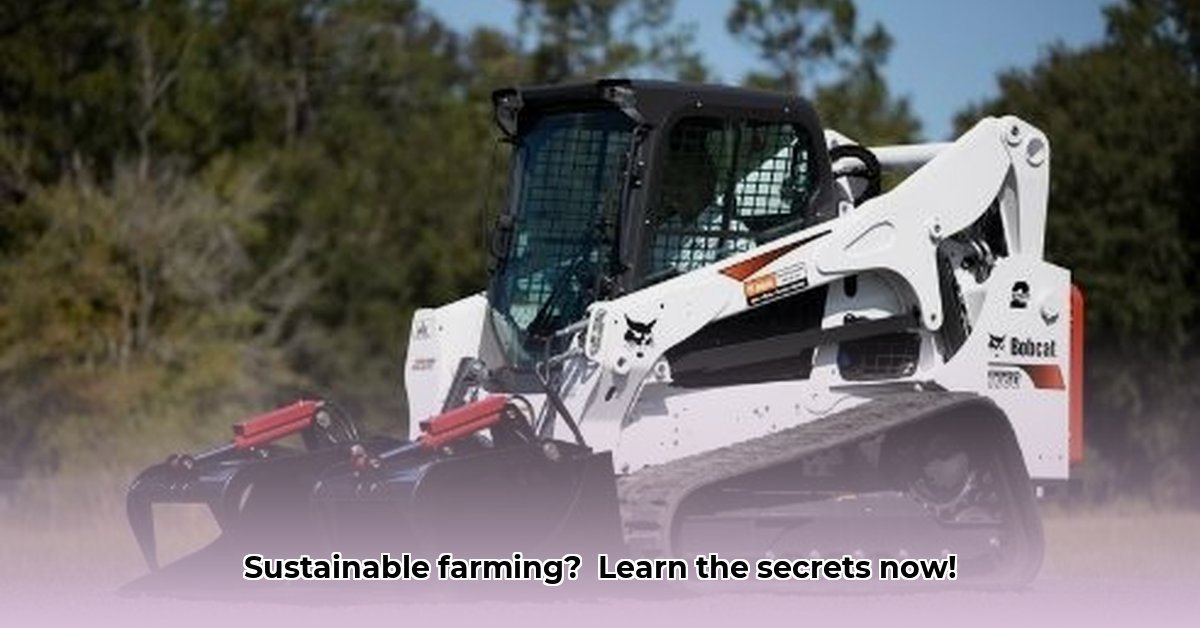
Choosing the right equipment is crucial for efficient and sustainable farming. This guide compares tractors and skid steers, helping you decide which best suits your operation. We'll examine their strengths and weaknesses, focusing on practical applications and environmental impact. For more detailed information on tractor skid steers, check out this helpful resource.
Tractors vs. Tractor Skid Steers: A Comparative Analysis
The choice between a tractor and a skid steer hinges on your farm's specific needs. Tractors are powerful workhorses ideal for large-scale operations, excelling at tasks like plowing vast fields and hauling heavy loads. Their high horsepower makes them efficient for extensive acreage, significantly reducing labor time on large-scale projects.
However, maneuverability is limited; operating in tight spaces or uneven terrain proves challenging. Their substantial weight also increases the risk of soil compaction, potentially harming long-term soil health.
Tractor skid steers offer a compelling alternative. Combining the hydraulic power of a tractor with the agility of a skid steer, they provide a blend of power and precision. This makes them well-suited for smaller farms, varied terrain, or tasks requiring accurate control. Their compact size minimizes soil compaction, a critical factor in sustainable agriculture. The smaller footprint also allows for efficient work in tighter spaces, ideal for navigating obstacles and working in more delicate areas.
Diving Deeper: Understanding the Advantages of Tractor Skid Steers
The unique advantage of a tractor skid steer lies in its versatility. It offers the strength of a tractor’s hydraulic system in a more compact, maneuverable package. This allows for intricate movements necessary for smaller operations or tasks demanding precision, while retaining a substantial power output for more intensive work.
Sustainability: Minimizing Environmental Impact
Sustainable farming practices prioritize minimizing environmental impact while maximizing yield. Soil health is paramount, and heavy machinery can significantly compact soil, hindering water penetration and root growth. Tractor skid steers, due to their lighter weight and superior maneuverability, generally cause less soil compaction, promoting long-term soil health and improving yields.
Fuel efficiency is another key sustainability aspect. Both tractors and skid steers offer fuel-efficient models, but selecting the right machine and implementing efficient operating techniques are crucial for minimizing fuel consumption and reducing related costs. Ongoing advancements in engine technology continuously improve fuel efficiency, so staying informed about these developments is crucial.
Choosing the Right Machine: A Step-by-Step Guide
Selecting the right equipment requires careful consideration of multiple factors. Follow these steps for a well-informed decision:
Assess Your Farm's Size and Terrain: Large, flat fields favor tractors. Small farms with varied terrain benefit from a tractor skid steer's maneuverability.
Identify Your Tasks: Large-scale tasks like tilling large acreage necessitate a tractor. A diverse range of tasks or those requiring precision point to a tractor skid steer.
Budgeting and Long-Term Costs: Consider initial purchase price, ongoing maintenance, fuel costs, potential repair costs and potential resale value. While tractors may have lower per-hour operating costs, the versatility of skid steers might offset higher initial costs over time. Dr. Anya Sharma, Agricultural Engineer at Purdue University, notes that "life cycle cost analysis is crucial in making a sound investment decision."
Attachment Options: Ensure the available attachments suit your specific needs. Both tractors and skid steers offer a wide range, but their availability and suitability vary considerably.
A Head-to-Head Comparison: Tractors vs. Tractor Skid Steers
| Feature | Tractor | Tractor Skid Steer |
|---|---|---|
| Power | High | Moderate |
| Maneuverability | Low | High |
| Initial Cost | Generally lower | Generally higher |
| Maintenance Costs | Generally lower | Generally higher |
| Soil Compaction Risk | Higher | Lower |
| Ideal Applications | Large-scale operations, extensive tilling | Precision tasks, smaller farms, landscaping |
| Fuel Efficiency | Varies by model | Varies by model |
Conclusion: Making the Right Choice for Your Sustainable Farm
The best choice depends on your farm's unique needs. Carefully weigh the factors outlined above – farm size, terrain, tasks, budget, and sustainability goals – to make the decision that best supports your farming operation. Remember, continuous research and advancements in agricultural machinery mean staying informed is key to making a sound, long-term investment.